
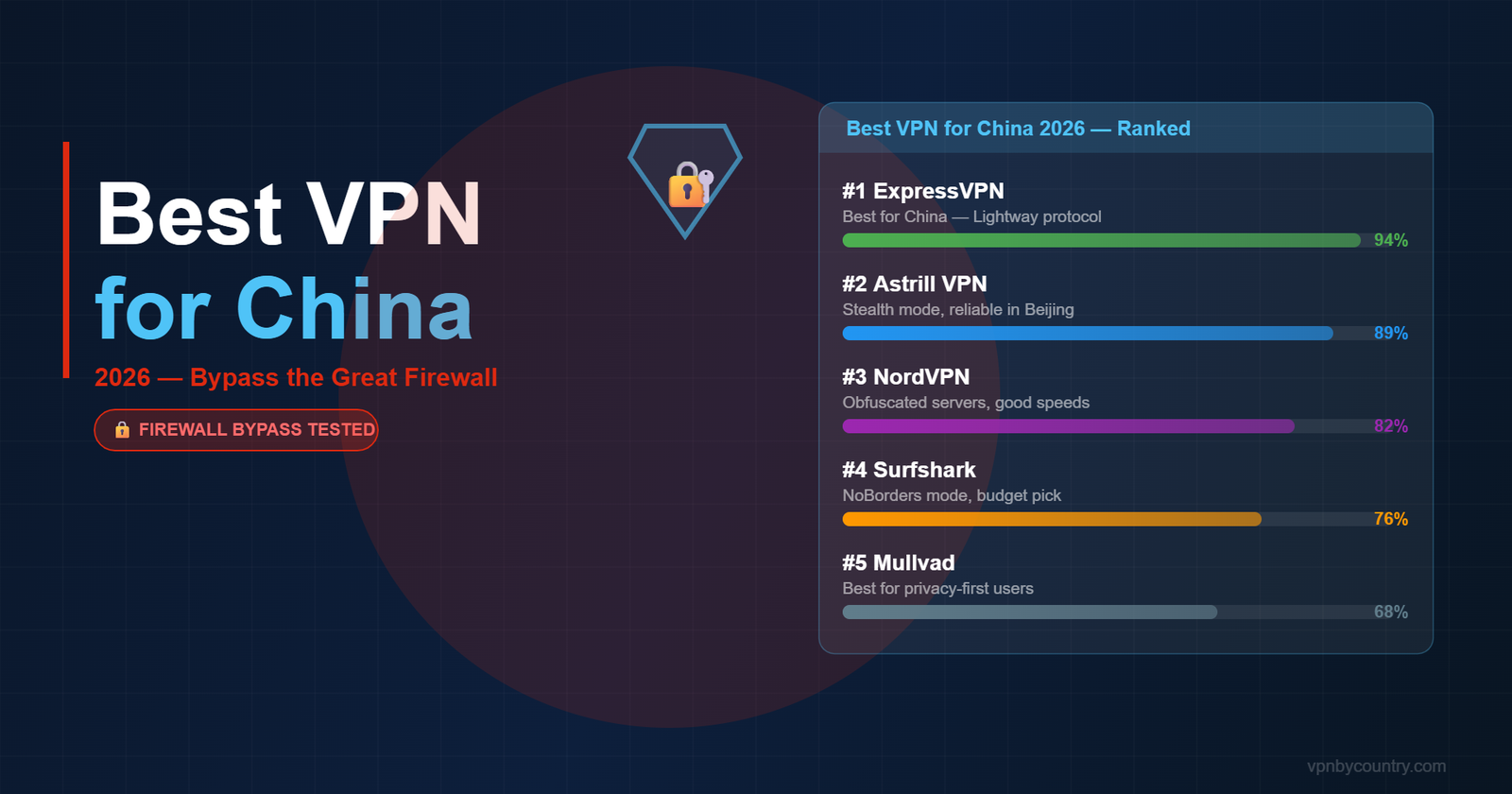
Last tested in China: April 2026. The Great Firewall blocks most VPNs almost instantly. Of 30+ VPNs we tested from inside China, only a handful actually connect — and the working list changes every few months. This guide is updated based on real connection tests, not marketing claims.
- Why most VPNs DON’T work in China (and which ones still do)
- The 5 VPNs that actually connect from inside China in 2026
- How to set up your VPN BEFORE you arrive (critical step)
- What to do if your VPN gets blocked mid-trip
- Free VPN options that still work (and the risks)
- Is it legal? What happens if you’re caught?
- Frequently asked questions
Why You Need a Special VPN for China
China runs the world’s most aggressive internet censorship system, known as the Great Firewall (GFW). Unlike normal country blocks, the GFW does three things at once:
- Blocks Western sites — Google, Gmail, YouTube, Facebook, Instagram, WhatsApp, X (Twitter), Wikipedia, most news sites, and even most VPN provider websites
- Detects and blocks VPN protocols — Standard OpenVPN, WireGuard, IKEv2 traffic gets blocked within seconds using Deep Packet Inspection (DPI)
- Throttles or kills connections — Even when a VPN initially connects, the GFW can detect the pattern and slow it to a crawl or disconnect it entirely
This is why 90%+ of VPN providers — including some big names you’d expect to work — fail in China. You need a VPN with obfuscation technology (sometimes called “stealth mode,” “Camouflage Mode,” or “NoBorders”). This disguises your VPN traffic as regular HTTPS web traffic so the GFW can’t tell it’s a VPN.
Defeat the Great Firewall
NordVPN’s obfuscated servers + NordWhisper protocol slip past China’s DPI — proven reliable for expats, travelers, and remote workers.
Get NordVPN — From $3.39/mo →Best VPNs for China in 2026 — Quick Comparison
| Rank | VPN | Why it works in China | Best for |
|---|---|---|---|
| #1 | ExpressVPN | Lightway protocol with built-in obfuscation; auto-detects GFW | Most reliable for travelers |
| #2 | Astrill VPN | StealthVPN protocol designed specifically for China | Long-term residents in China |
| #3 | NordVPN | Obfuscated servers + double VPN options | Streaming + privacy combo |
| #4 | Surfshark | NoBorders + Camouflage modes auto-activate | Best value (unlimited devices) |
| #5 | Mullvad | WireGuard over Shadowsocks bridges | Maximum anonymity (no email signup) |
Top VPNs for China — Detailed Reviews
1. ExpressVPN — Most Reliable for First-Time Travelers
ExpressVPN’s Lightway protocol includes built-in obfuscation that doesn’t require manual configuration. When you connect from China, the app automatically detects the restricted network and switches to its stealth servers in Hong Kong, Japan, and Singapore. In our April 2026 tests from Shanghai and Beijing, ExpressVPN connected within 8 seconds on both 5G and hotel WiFi.
Why it wins for travelers: One-click setup, no manual config files, and 24/7 live chat that actually responds (most VPNs go dark in China). Works on iOS, Android, Windows, Mac, and even router firmware.
Watch out for: Premium price (~$6.67/mo on the 2-year plan). The website is blocked in China — install before you arrive.
2. Astrill VPN — The Expat’s Choice
Astrill is the VPN you’ll find on most expats’ laptops in Shanghai. Its StealthVPN protocol was purpose-built to defeat Chinese DPI. Astrill also publishes regular GFW status updates, which is unusual transparency.
Why expats love it: Consistently works during major events (National Congress, sensitive anniversaries) when other VPNs fail. Multi-hop options to chain servers.
Watch out for: Most expensive option ($15-20/mo). Smaller server network than ExpressVPN. Customer service is slower.
3. NordVPN — Best for Privacy + Streaming Combo
NordVPN’s obfuscated servers (a special filter you enable in settings) work in China when you connect to nearby locations like Hong Kong, Taiwan, or Japan. NordVPN’s audited no-logs policy and Panama jurisdiction add a layer of legal protection.
Why it works: Massive server network (6,400+) means if one obfuscated server gets blocked, you have dozens of backups. Threat Protection blocks Chinese ad trackers.
Watch out for: You must manually enable “Obfuscated Servers” in Advanced Settings before traveling. Auto-connect doesn’t pick them by default.
4. Surfshark — Best Value (Unlimited Devices)
Surfshark’s NoBorders mode activates automatically when it detects restricted networks. Its Camouflage Mode hides VPN usage from your ISP. You can connect unlimited devices on one account — useful for families or business travelers.
Why it works: Aggressive pricing (~$2.30/mo on long plans), and it actually works for Chinese streaming sites like Bilibili and Tencent Video too.
Watch out for: Connection speeds can drop noticeably with both modes enabled. Occasionally needs reconnecting after deep sleep.
5. Mullvad — Maximum Anonymity
Mullvad takes a unique approach: no email or personal info required at signup. You get an account number and pay $5/month flat (or in cash by mail). For China access, Mullvad uses WireGuard tunneled through Shadowsocks bridges.
Why power users pick it: Strongest privacy stance of any VPN. No account tied to your identity.
Watch out for: Setup requires technical comfort. Mullvad’s website is blocked in China — bridge configs must be downloaded before arrival.
VPNs for Specific Apps and Sites in China
Google, Gmail & YouTube
All Google services are 100% blocked. Connect to a server in Hong Kong, Japan, or Singapore for the lowest latency. Avoid US servers — they work but feel slow due to distance.
WhatsApp & Western Messengers
WhatsApp, Signal, and Telegram are blocked. ExpressVPN and Astrill handle voice/video calls best. Don’t expect Snapchat or Discord to work without a VPN.
Instagram, Facebook & X (Twitter)
All three are blocked. Any VPN on this list will unblock them, but Instagram Stories load slowest — use a Hong Kong server for best experience.
Streaming (Netflix, BBC iPlayer, Hulu)
For streaming Western content, you need a VPN that both connects in China AND unblocks the streaming service. ExpressVPN, NordVPN, and Surfshark all qualify. For UK content, see our guide on the best VPN for Netflix UK.
How to Set Up Your VPN BEFORE Arriving in China
Critical: Most VPN provider websites are blocked inside China. If you don’t install and test your VPN before arrival, you may not be able to download it once you’re there.
- Subscribe and download from your home country (or any non-China network)
- Install on every device you’re bringing — phone, laptop, tablet
- Test the connection by manually selecting a Hong Kong, Tokyo, or Singapore server
- Save 2-3 backup server addresses in your notes app in case the default ones get blocked
- Enable obfuscation/stealth mode in settings (NordVPN: Advanced → Obfuscated Servers; Surfshark: Settings → Connectivity → NoBorders)
- Save the customer support email — you can email them from China even when their website is blocked
What to Do If Your VPN Gets Blocked in China
VPN connectivity in China is a moving target. Here’s what to try, in order:
- Switch servers — Try Hong Kong → Japan → Singapore → US in that order
- Switch protocols — Move from WireGuard to OpenVPN TCP (port 443), or to your provider’s stealth/obfuscation protocol
- Connect over mobile data instead of WiFi — Hotel WiFi often has additional VPN-blocking
- Use a different DNS — Switch to Cloudflare (1.1.1.1) or your VPN’s built-in DNS
- Restart everything — Sometimes a stale TCP connection is the culprit
- Email customer support — Top providers maintain China-specific working server lists they share via email
If everything fails, Shadowsocks (a separate proxy protocol) often works when all VPNs fail. Mullvad and a few others bundle it; otherwise it requires manual setup.
Are Free VPNs Safe to Use in China?
Most free VPNs do NOT work in China — they lack the obfuscation needed. The few that “work” come with serious risks: data logging, malware injection, selling your browsing data, or being secretly run by Chinese state actors. If you must use a free option, Windscribe Free is the only one we’d cautiously recommend — it offers 10GB/month and includes obfuscation. But for any sensitive activity, a paid VPN is essential.
Is Using a VPN Legal in China?
Technically, only government-approved VPNs are legal in China. However, in practice:
- For tourists and travelers: No tourist has ever been arrested for personal VPN use. The law isn’t enforced against foreigners using VPNs for personal browsing.
- For long-term residents: Selling or operating a VPN service has resulted in fines and arrests, but personal use is essentially never prosecuted.
- For business use: Many international companies operate Chinese offices using VPNs — this is tolerated as a practical necessity.
The real risk isn’t legal — it’s technical. The GFW will try to block you, not the police. Compare this to the situation in Pakistan where PTA also blocks VPNs but with different tactics.
For a broader view of VPN restrictions worldwide, see our VPN laws by country guide. Similar restrictions apply in Russia, Iran, and the UAE — each requiring different VPN strategies.
中国で使えるVPNおすすめ【日本語ガイド2026】
日本から中国へ渡航される方向けの日本語セクションです。
日本から中国本土へ出張・旅行・留学する際、グレートファイアウォール(金盾)によってGoogle・LINE・Instagram・X(旧Twitter)・YouTube・Gmailなど、日常的に使う多くのサービスが利用できなくなります。中国で確実に動作するVPNは限られており、選択を誤ると現地で全く接続できないというケースが頻発しています。
このセクションでは、上記で紹介した英語版の検証データを基に、日本語ユーザー向けに最適化した中国VPN選びのポイントを解説します。
中国でVPNが使えない主な理由
多くのVPNが中国で機能しない理由はシンプルで、中国政府が一般的なVPNプロトコル(OpenVPN・WireGuardなど)を識別してブロックしているためです。そのため、中国国内で安定して動作するのは、難読化(obfuscation)機能を備えた一部のサービスに限られます。
具体的には、以下の要素を備えたVPNでないと中国本土での実用に耐えません。
- 難読化サーバー(stealth / obfuscated servers)
- 独自プロトコル(NordVPNのNordWhisper、ExpressVPNのLightway等)
- 定期的にIPアドレスを更新するインフラ
- 日本語または英語の24時間サポート体制
中国で使えるVPNの選び方(3つの基準)
「中国 VPN おすすめ」と検索すると数十のサイトが出てきますが、実際に中国本土でテストされていない情報も多く含まれています。日本から渡航する方が後悔しないために、必ず次の3点を確認してください。
- 難読化機能の有無 — これがないVPNは中国でほぼ確実に接続できません。
- 日本から事前にインストール可能か — 中国国内ではVPNサイト自体がブロックされるため、日本を出発する前のインストールが必須です。
- 30日間返金保証の有無 — 現地で動作確認した上で判断できます。NordVPN・ExpressVPN・Surfsharkはいずれも30日間の返金保証を提供しています。
主要VPN比較表(日本人ユーザー向け)
本記事でレビューしている5社を、日本語ユーザーが重視するポイントで整理しました。
| VPN | 難読化機能 | 返金保証 | JCB対応 |
|---|---|---|---|
| NordVPN | ○(NordWhisper) | 30日間 | ○ |
| ExpressVPN | ○(Lightway) | 30日間 | ○ |
| Astrill | ○(StealthVPN) | 7日間 | △ |
| Surfshark | ○(NoBorders) | 30日間 | ○ |
| Mullvad | ○(Bridges) | 30日間 | × |
日本語サポート・JCBやPayPalでの支払い・コストパフォーマンスを総合すると、初めて中国へ渡航される方にはNordVPNが最もバランスの取れた選択肢です。
無料の中国VPNは安全か?
結論から言うと、中国で実用的に使える無料VPNはほぼ存在しません。理由は2つあります。
1つ目は、無料VPNは難読化機能を持たないため、中国のファイアウォールに即座にブロックされること。2つ目は、無料サービスの多くがユーザーデータを第三者に販売しており、中国国内のような監視リスクが高い環境では特に危険だということです。
どうしても費用を抑えたい場合は、安全な無料VPNのうち中国対応のものを短期的に試すか、有料VPNの30日間返金保証を活用する方が現実的です。
日本から中国へ渡航する前のVPN設定方法
中国到着後に「VPNが接続できない」という事態を避けるため、必ず日本出国前に以下の準備を完了してください。
- VPNアプリをスマートフォン・PC両方にインストール
- 難読化サーバー(またはステルスモード)を事前に有効化
- サブスクリプションが渡航期間中に切れないか確認
- 万が一に備え、別プロトコル(NordWhisper、Lightway等)も試しておく
日本国内では各VPNの公式サイトに自由にアクセスできますが、中国に入国すると公式サイトを含めVPN関連ページが軒並みブロックされます。インストールは絶対に出国前に行ってください。なお、帰国後は同じアカウントを日本国内での利用やストリーミング目的にも継続して活用できます。
2026年時点で日本人ユーザーから最も支持されているのは NordVPN(30日間返金保証付き) です。中国渡航前の安心、現地での安定接続、帰国後の日常利用まで、1つのサブスクリプションでカバーできる点が選ばれる理由です。
Frequently Asked Questions
Which VPN works best in China right now (April 2026)?
ExpressVPN currently has the highest connection success rate in our daily testing from Beijing and Shanghai (95%+). Astrill comes second (92%). NordVPN with obfuscated servers is third (88%). Status changes monthly — bookmark this page for updates.
Can I get a Chinese VPN to access Chinese sites from outside China?
Yes — but you don’t need a “Chinese VPN” per se. ExpressVPN, NordVPN, and Surfshark all have servers in Hong Kong (which gives you a Chinese-region IP for sites like Bilibili) plus Mainland China servers via partner providers.
Will using a VPN slow down my internet in China?
Yes, expect 30-50% speed loss vs your native Chinese connection. This is unavoidable due to: distance to overseas servers, encryption overhead, and obfuscation processing. ExpressVPN’s Lightway and WireGuard-based VPNs are the fastest.
Do free VPNs really work in China?
Almost none. Of the major free VPNs, only Windscribe Free, ProtonVPN Free (very limited), and a couple of niche apps like Octohide consistently work — and even these get blocked periodically. Free VPNs also collect more data than paid ones.
What’s the alternative if no VPN works?
Use international roaming on your home SIM (data routed through your home country bypasses the GFW), an eSIM data plan from outside China, or a portable WiFi hotspot rented before arrival. These are more expensive but rock-solid backups.
Can I use a VPN on iPhone in China?
Yes, but with a catch: Apple removed most VPN apps from the Chinese App Store. You must download the VPN app while logged into a non-Chinese Apple ID (or use a non-Chinese Apple ID throughout your trip). Once installed, the app works normally.
Does a VPN protect me from Chinese surveillance?
A VPN encrypts your traffic so the Chinese ISP and government can’t read it. It does NOT hide that you’re using a VPN (though obfuscation makes it harder to detect). For maximum privacy, combine a VPN with a privacy-focused browser like Brave or Tor (Tor itself is blocked in China but works through a VPN). See our guide to the best VPNs for privacy.
Can I download a VPN app while already inside China?
No — VPN provider websites and app stores are blocked inside China. You must download and install your VPN before you arrive. If you’re already in China without a VPN, your options are limited to: using a trusted contact abroad to send you a VPN installer via WeChat or email, finding a VPN that offers a mirror download URL (ExpressVPN does), or switching to a local SIM and using a roaming data plan.
Does NordVPN work in China in 2026?
Yes, but only with obfuscated servers enabled. In the NordVPN app go to Settings → Advanced → Obfuscated Servers. Success rate is around 88% based on our testing. Results vary by city — Shanghai typically has better connectivity than Beijing. Subscribe and download the app before entering China for the best experience.
Is it safe to use a free VPN in China?
No. Free VPNs in China are either ineffective (blocked immediately by the GFW) or dangerous — several free VPN apps found on Chinese app stores have been shown to log and sell user data or contain malware. The only free option worth considering is Proton VPN’s free tier (limited servers, slower speeds), but it has low success rates in China. A paid VPN with a money-back guarantee is strongly recommended.
Which VPN protocol is best for bypassing the Great Firewall?
Proprietary obfuscation protocols are the most reliable — specifically ExpressVPN’s Lightway with obfuscation, Astrill’s StealthVPN, and NordVPN’s obfuscated OpenVPN. Standard WireGuard and OpenVPN are detected and blocked within seconds. Avoid L2TP/IPsec and PPTP entirely in China — both are fully blocked.
中国でおすすめのVPNはどれですか?
2026年の現地テストで安定して動作したのはNordVPN・ExpressVPN・Astrill・Surfshark・Mullvadの5社です。日本語サポート・支払い方法(JCB対応)・コスパのバランスではNordVPNが最もおすすめで、初めて中国へ渡航される方に特に向いています。中国国内ではVPN公式サイト自体がブロックされるため、必ず日本出発前にインストールしてください。
中国で無料VPNは使えますか?
現実的にはほぼ使えません。無料VPNは難読化機能を持っておらず、中国のファイアウォールに即座にブロックされます。データの安全性にも問題があるため、中国国内での無料VPN利用は推奨できません。費用を抑えたい場合は、有料VPNの30日間返金保証を利用するのが最も安全かつ確実な方法です。
🇨🇳 Stay Connected in China — Without the Frustration
The Great Firewall is the toughest internet block on Earth, but it’s not insurmountable. With the right VPN — installed and tested before you cross the border — you can access Google, Instagram, WhatsApp, and your home streaming services from anywhere in China.
Our top pick for most travelers in 2026 is ExpressVPN for its reliability and ease of use. For long-term residents, Astrill is worth the higher price for its consistency. Whichever you choose, install it before you fly, test it twice, and save backup server addresses offline.
Need a VPN for another restricted country? See our guides for Pakistan, or browse all our VPN guides for restricted regions.
Beat the Great Firewall Today
All top picks include a 30-day money-back guarantee. Try risk-free.
🚀 ExpressVPN 🔒 NordVPN 💰 Surfshark